Every operator says they want a ready workforce. Very few can say what "ready" means, or prove it. Here is how we define workforce readiness, what we believe about it, and how we measure it, with the evidence from infra/STRUCTURE 2026 that made it urgent.
The industry just moved from demand to execution
At infra/STRUCTURE 2026 in Las Vegas, Philbert Shih of Structure Research opened the summit by naming the moment: the Interlude. Demand is proven. The capital is committed. Big-five hyperscaler capex is heading to roughly $825bn this year, and AI capacity is forecast to grow from about 15 GW in 2025 to about 140 GW by 2030.
What comes next is execution. And execution is where the workforce question stops being theoretical.
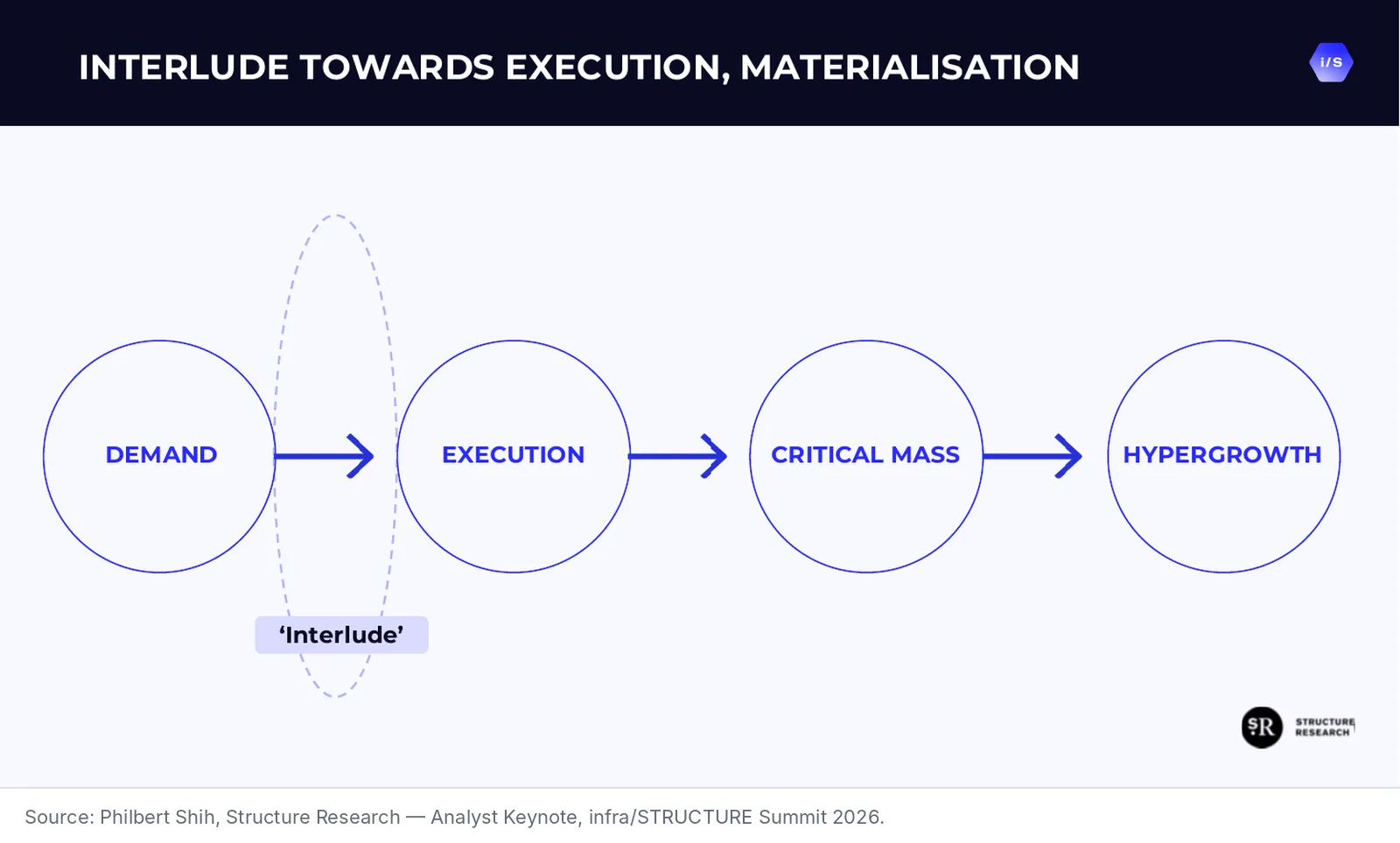
When a market moves from demand to execution, the scarce resource changes. It is no longer customers or capital. It is the ability to deliver and run what has been sold. That ability sits with people. So before we talk about how to measure it, we need to agree on what it is.
Capacity is not capability
Most workforce reporting in our industry measures capacity. Headcount. Open requisitions. Training hours. Courses completed. These numbers are easy to collect, and they answer the wrong question.
Capacity tells you how many people you have. Capability tells you whether the site runs.
Two sites can have the same headcount and very different outcomes. One has a shift that can bring a liquid-cooled hall back online at 3 a.m. The other has the same number of people, all with completed courses, and nobody on duty who has done it before.
So here is the definition we work from:
Workforce readiness is the measured ability of a specific team to do the specific work a specific site requires, today. It brings together skills, certifications, learning and performance KPIs against one calibrated standard, with evidence.
Every part of that sentence does a job. Specific team and specific site, because readiness is local. Today, because it decays: people leave, certifications expire, equipment changes. Calibrated standard, because a score has to mean the same thing everywhere. With evidence, because "we think they're ready" is not something you can show an auditor, a customer or a board.
And the four signals each answer a different question:
- Skills: can this person do the work, and at what level?
- Certifications: are they qualified and authorised to do it, and is that still current?
- Learning: is the gap closing, and how fast?
- Performance KPIs: does it hold up in real operations?
Any one of them on its own misleads. A certified technician can still be out of practice. A strong performer can be working on an expired certification. A full training record says nothing about results. Readiness is what you see when all four are read together.
One standard, everything connected
A definition is only useful if there is something precise to measure against. For us, that is one calibrated standard that every site, role and person is measured against. We call its backbone the Skill Spine.
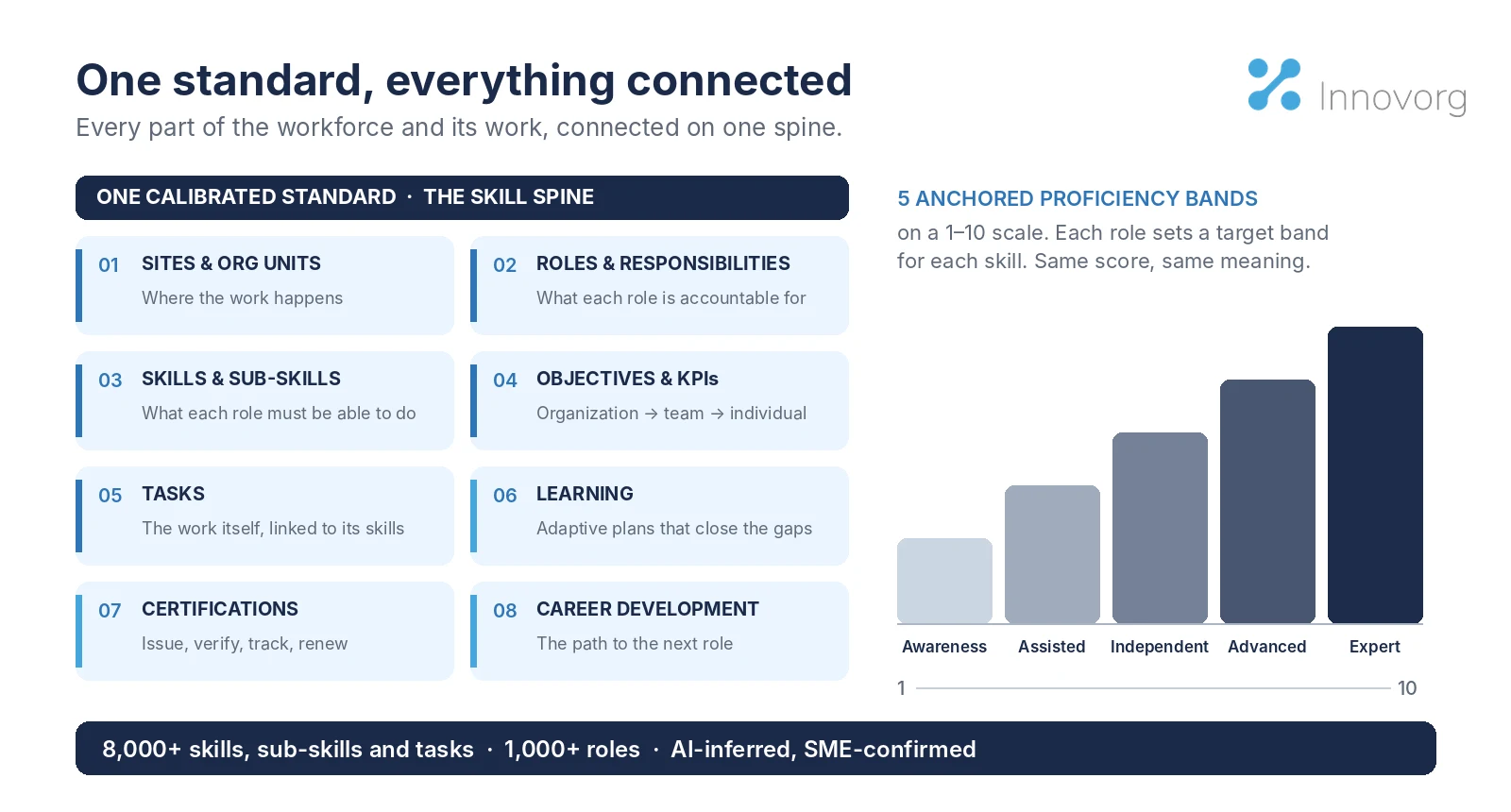
Everything that describes the workforce and its work sits on that one spine, as one connected model rather than separate systems with their own definitions:
- Sites & org units. Where the work happens and who owns it. Readiness is always measured somewhere specific: this campus, this hall, this team.
- Roles & responsibilities. Each role is defined by what it is accountable for, not just its title. A Data Center Technician, a NOC Analyst and a Network Engineer carry different responsibilities, so they are held to different targets. Managers can add individual skills where a person's job goes beyond the role template.
- Skills & sub-skills. What each role needs to be able to do. Skills such as Critical Power Distribution or Cooling & Environmental Systems break down into sub-skills: Cooling & Environmental Systems, for example, might include CRAH/CRAC operation, liquid-cooling loop management and leak response. Each is assessed on its own, so you can see exactly where a gap sits.
- Objectives & KPIs. Objectives cascade from the organization to the team to the individual. Team KPIs and individual role objectives are linked to the skills they depend on, so performance counts as evidence of skill and skills growth can be traced to operational outcomes.
- Tasks. The specific work a role carries out, such as running a generator load test or responding to a cooling alarm. Each task is linked to the skills it requires, so you can see whether the person doing it is ready to do it, not just whether they hold the right title.
- Learning. Every gap becomes part of an adaptive learning plan: mandatory learning first, then role-specific learning matched to that person's gaps. Learning activity is one of the signals that moves the score, so you can see whether a gap is actually closing.
- Certifications. Each role's required certifications are connected to the skills they prove. The full credential lifecycle (issue, verify, track, renew) runs against the standard, and certification status feeds the readiness score directly. When a certification lapses, readiness drops that day, and the renewal alert goes out before it does.
- Career development. Career maps show the skills and certifications between someone's current role and the next one. Internal moves, succession plans and high-potential talent are judged on verified capability, not on who asked first.
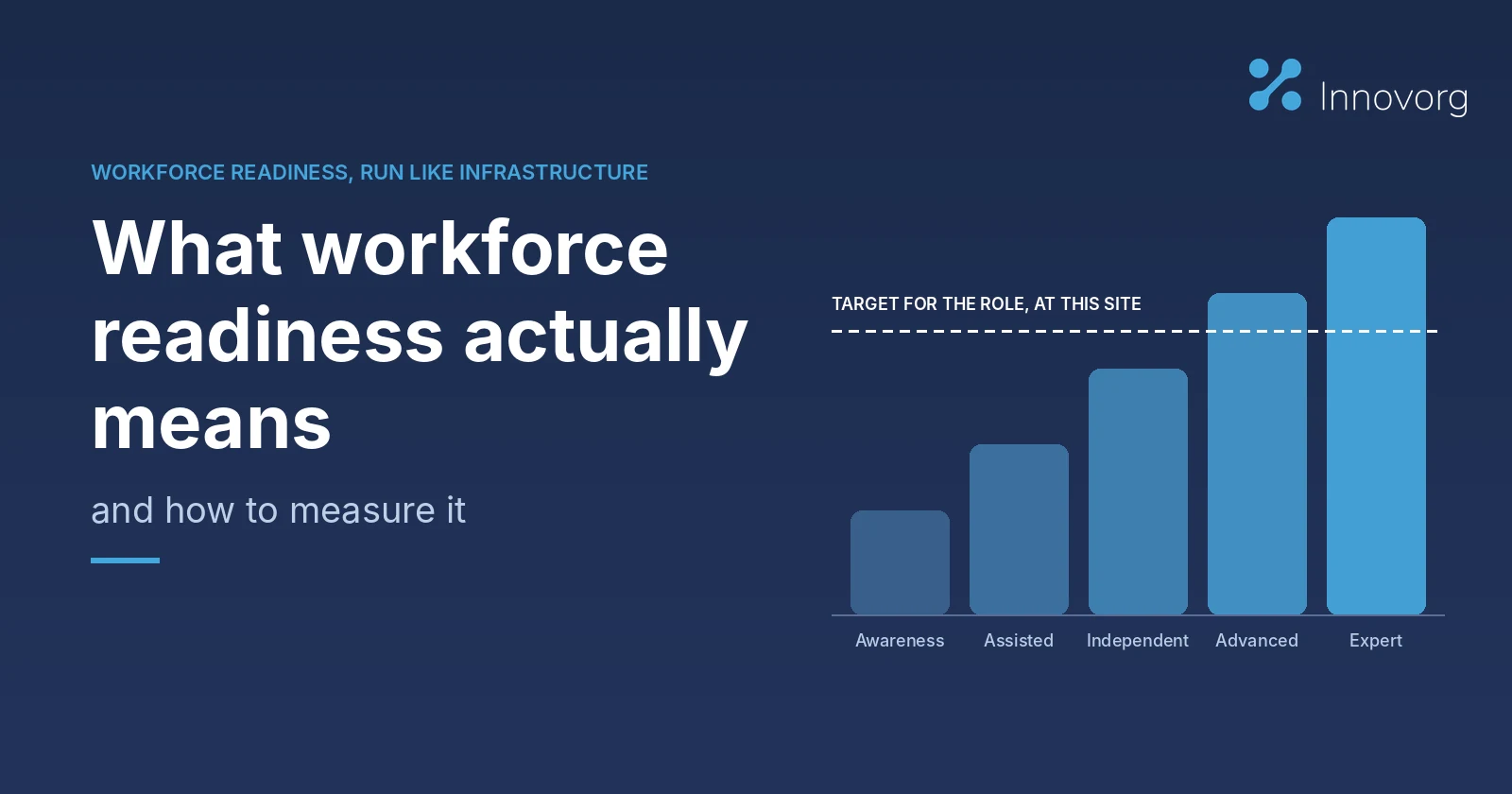
Every skill is measured on five anchored proficiency bands on a 1–10 scale, and each role sets a target band for each skill. Readiness is the distance between where a person is and where their role, at their site, needs them to be. Some skills matter more than others: priority skills steer development and analytics, and business-critical skills are locked into the role so nobody can quietly drop them.
The spine covers 8,000+ calibrated skills, sub-skills and tasks across 1,000+ roles, built for this industry. Skills are AI-inferred and confirmed by subject-matter experts, so the standard reflects how the work is really done.
This is also where most workforce tools fall short. An LMS records the courses someone finished. It cannot tell you whether a technician can isolate a leaking CDU in a live hall on their own, or still needs someone beside them. That gap is where outages, delays and turnover live.
Why five bands?
The number of bands is a design decision, and it matters more than it looks.
Three bands (beginner, intermediate, expert) are too coarse. They lump together the person who still needs an expert within reach and the person who can take an escalation alone at 3 a.m. That is the most important distinction in operations, and a three-band scale hides it.
Ten unanchored levels go wrong in the other direction. They look precise, but two managers will rarely agree whether someone is a 6 or a 7. Scores drift by assessor and by region, and you lose the ability to compare sites.
Five anchored bands sit where the real operational decisions are:
| Band | What it means in practice | The decision it supports |
|---|---|---|
| Awareness | Understands the basic concepts; little or no hands-on experience | Learning first; not yet on the work |
| Assisted | Has hands-on experience, but needs help to perform the work | Pair them and build experience under guidance |
| Independent | Completes most of the work alone; occasionally needs an expert | Assign routine work, with expert backup |
| Advanced | Fully independent; handles escalations; the person others ask | Lead on incidents; cover the shift alone |
| Expert | Develops others; a recognized authority on the subject | Owns the method, the training and the hardest calls |
Each band is anchored to observable behaviour, not adjectives, so assessors land in the same place. The 1–10 scale underneath gives finer resolution inside a band, for example to show someone moving from early to solid Independent, without losing the shared meaning of the band itself.
Why the connections matter more than the parts
Most operators already have every one of these parts somewhere. Roles live in the HRIS. Courses live in the LMS. Certifications live in a tracker or a spreadsheet. KPIs live in a performance tool. Skills, if they are tracked at all, live in a manager's head.
Each system is accurate on its own terms, and none of them can answer the only question that matters on the night shift: is this person ready to do this work, at this site, right now? That answer needs all of them at once, measured against the same definitions.
Here is what disconnection looks like in practice. A technician's high-voltage certification lapses. The tracker shows it, but nobody is watching the tracker. The LMS shows the refresher course as complete, so it looks fine. The shift schedule still has them on switchgear work next week. Nobody sees the conflict until an audit, or an incident.
On a connected standard, the same lapse changes the record everywhere at once. Readiness for the tasks that need that certification drops that day, at that site. The renewal was flagged weeks earlier. The gap appears in the learning plan, and the manager sees it before the shift does.
That is why every part has to sit on one spine. Not because integration is tidy, but because readiness is a single answer, and you cannot assemble it from systems that disagree about what a role, a skill or "ready" means.
One standard across the whole employee journey
The same connected model supports a person from their first day to their next role. Each stage asks a different question, and each answer draws on a different combination of the same parts.
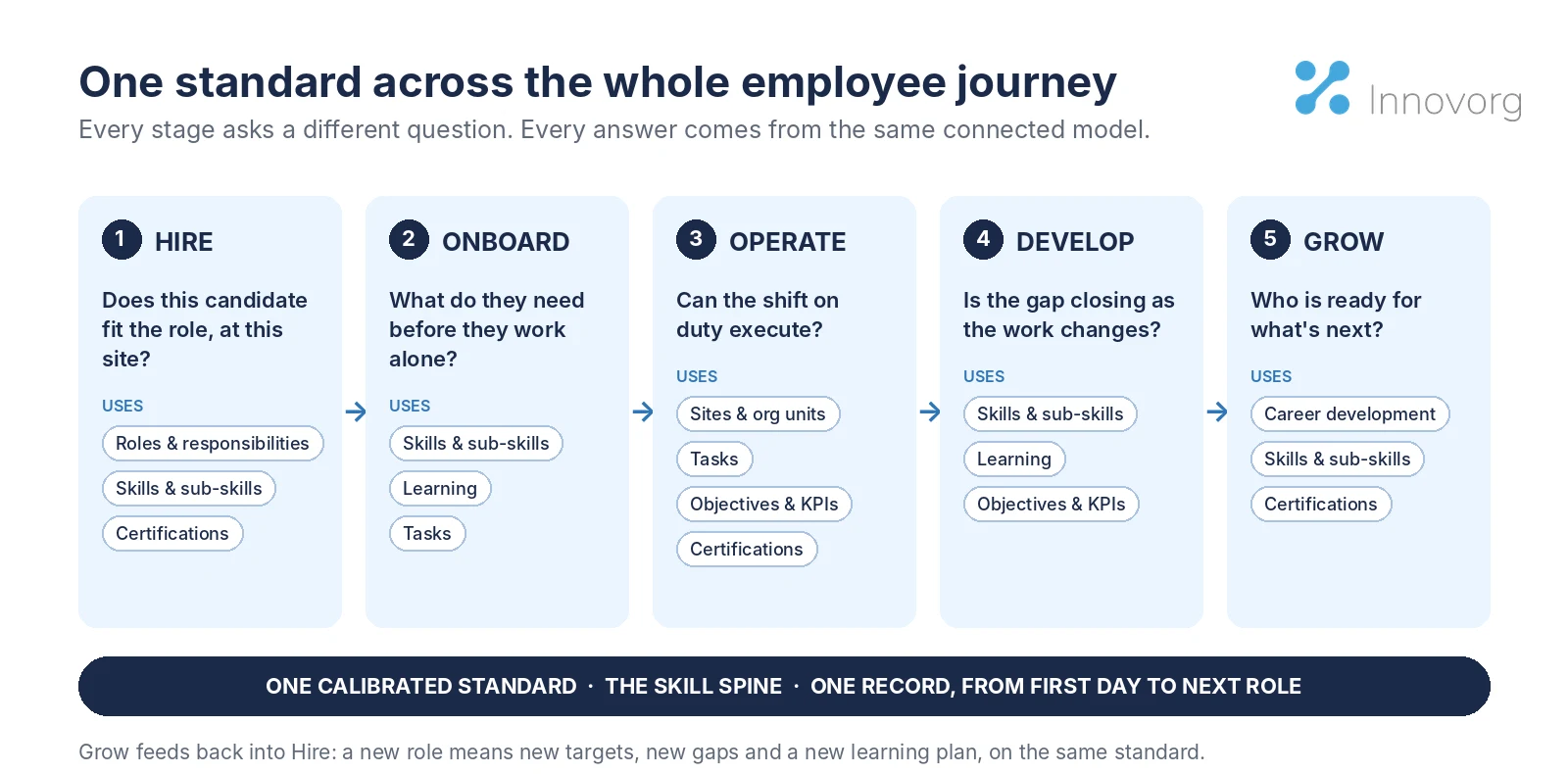
- Hire: does this candidate fit the role, at this site? Candidates are assessed against the same calibrated role targets that operations uses, not a separate recruiting checklist. Required certifications are checked against the role before day one.
- Onboard: what do they need before they can work alone? The gap between the new hire and their role target becomes their onboarding plan. Learning is assigned to the real gap, not a generic curriculum, and tasks are opened up as each skill reaches the band the role requires.
- Operate: can the shift on duty execute? Readiness is live per person, team and site. Objectives and KPIs feed in as evidence, certifications are kept current, and tasks are matched to the people who are ready for them.
- Develop: is the gap closing as the work changes? When the equipment or the role changes, the target is recalibrated and the new gap flows straight into the learning plan. Re-assessment shows whether it is closing.
- Grow: who is ready for what's next? Career maps show the skills and certifications between the current role and the next one. When someone moves, the journey starts again, against new targets, on the same standard.
Nothing has to be re-entered, re-defined or reconciled between stages. That continuity is what makes readiness something you can manage, rather than something you discover.
Measured by role and site, because the work keeps changing
Readiness only means something against a target. And in our industry, the target is moving faster than it ever has.
Phil's "old vs new" slide is a good map of how much has shifted in a few years: from air cooling to liquid, from data halls to campuses, from CPU to CPU plus GPU, from major metros to second-tier markets.
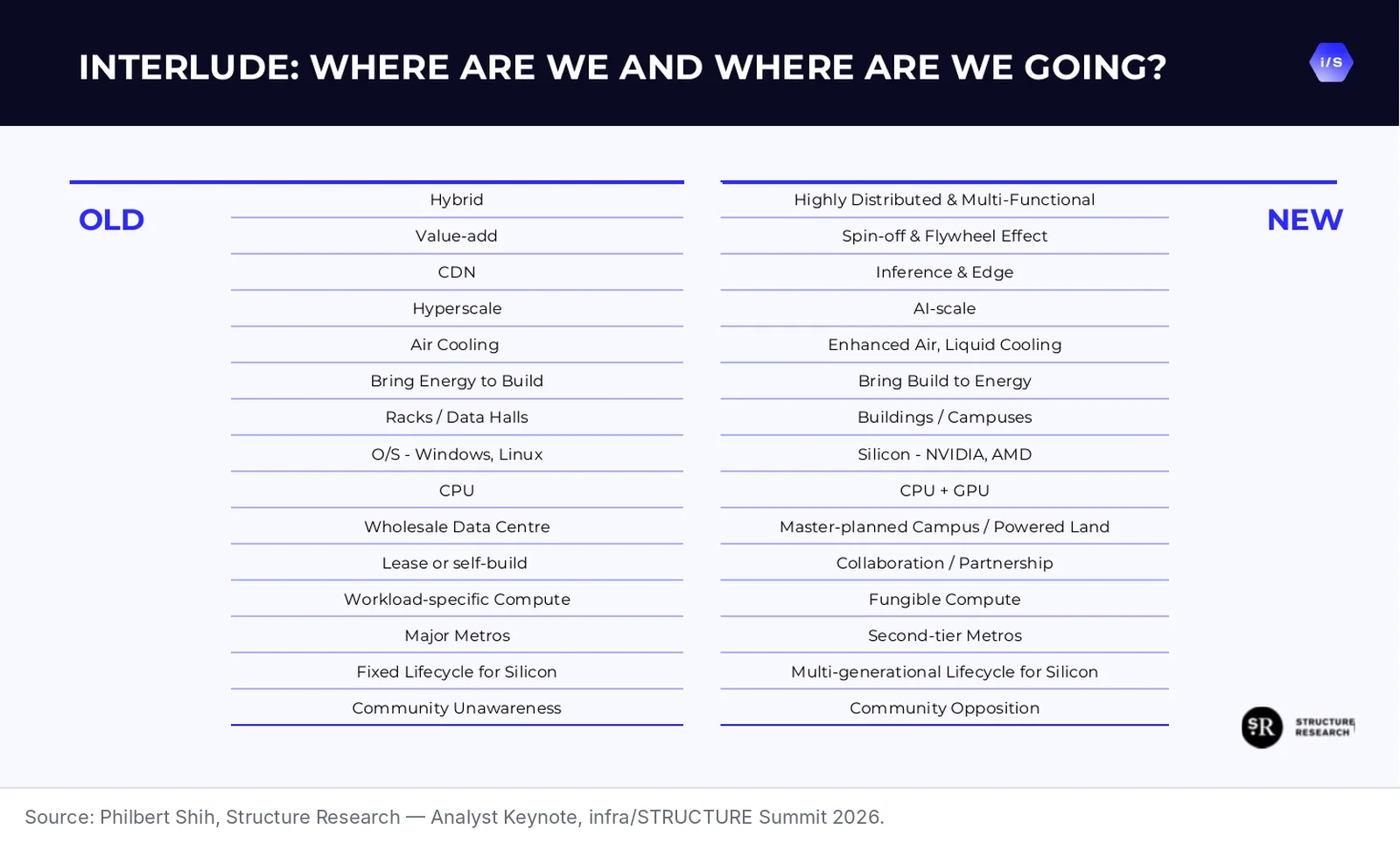
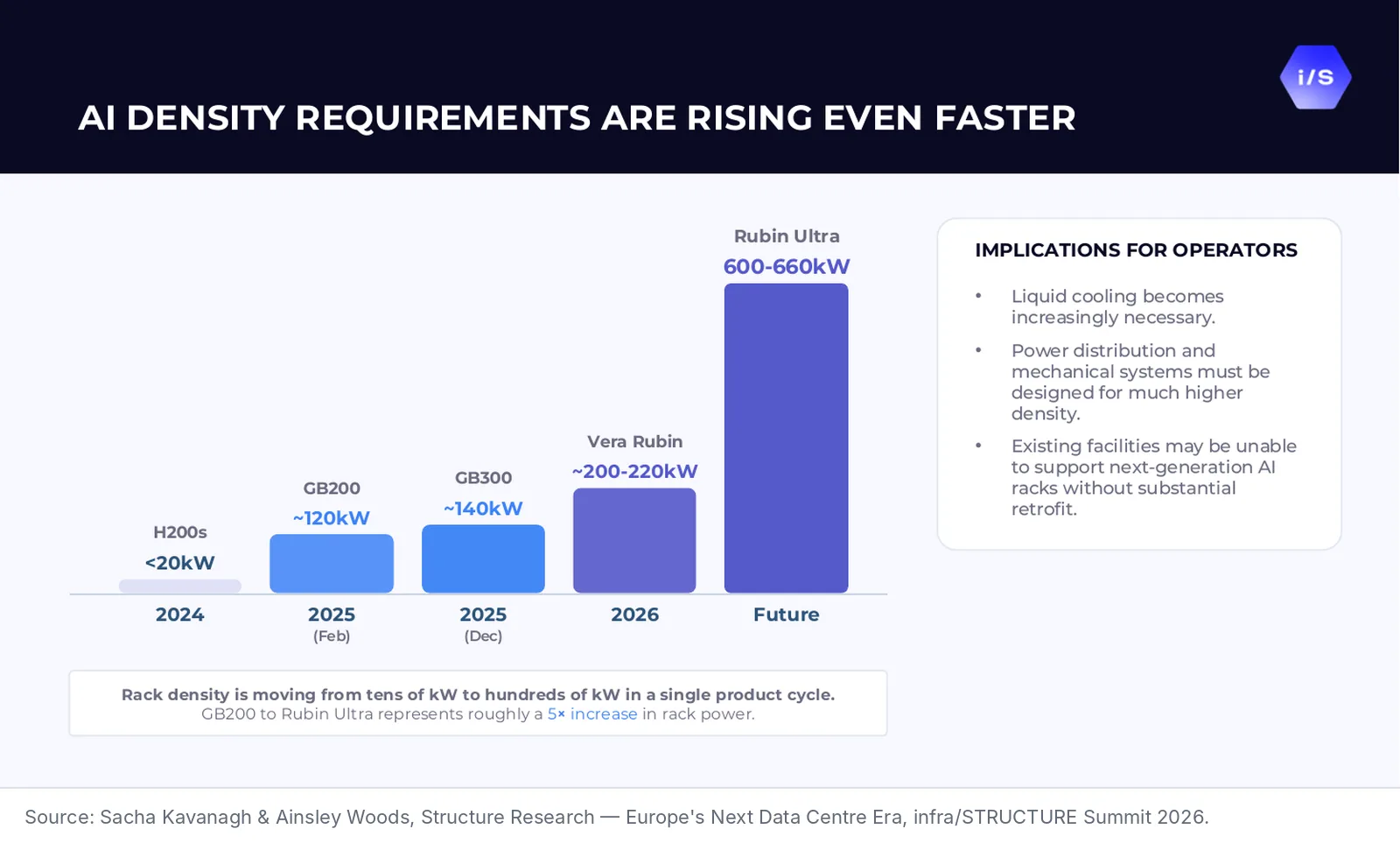
Every line on that slide is also a change to a job. The Europe research team put a number on one of them. Rack density is moving from under 20 kW to 600–660 kW in a few product cycles, roughly a 5x jump from GB200 to Rubin Ultra alone. Liquid cooling becomes necessary, and existing facilities may not support next-generation racks without major retrofit.
That is why we never measure readiness against a generic job title. We measure it against a role profile for a specific site: the skills that role needs, at the proficiency the site's equipment demands. When the hall changes, the profile is recalibrated, and the team's readiness score changes with it, even if nobody has left or joined.
In practice that means asking, for every material change to a site:
- Which roles does this change touch?
- Which skills are new, and which existing skills now need a higher proficiency?
- Who on each shift meets the new profile today, and who has a gap?
How a calibrated standard works
A readiness score is only useful if it is trusted. People trust a score when it means the same thing everywhere, is backed by evidence, and has someone accountable for it. These are the four rules we hold ourselves to.
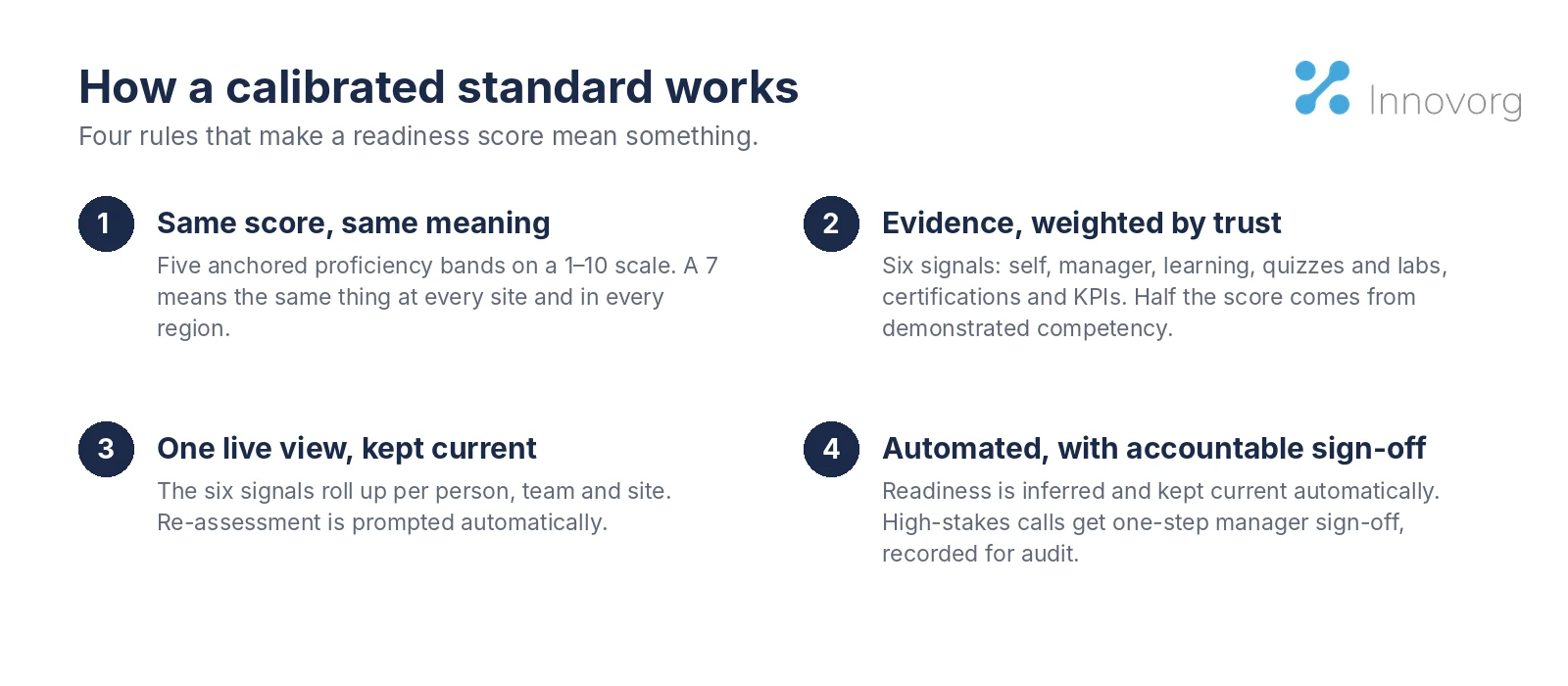
- Same score, same meaning. Proficiency sits on the Skill Spine's five anchored bands, from Awareness to Expert, on a 1–10 scale. Each band is described in observable terms, so a 7 in Ashburn means the same as a 7 in Singapore. Without anchors, scores drift by manager and by region, and you cannot compare sites.
- Evidence, weighted by trust. Every skill score draws on six signals: self-assessment, manager assessment, learning activity, quizzes and labs, certifications, and KPI alignment. They are not equal. Half of the weighted score comes from demonstrated competency: what a person shows in quizzes, challenges and hands-on labs. What people say about themselves counts. What they can show counts more.
- One live view, kept current. The six signals roll up into one readiness view per person, per team and per site. Readiness decays, so the standard has to keep up: assessments are incremental rather than annual, re-assessment is prompted automatically, and the skills catalog itself is reviewed and kept current. A spreadsheet updated once a year is a snapshot, not a view.
- Automated, with accountable sign-off. The platform infers readiness from the evidence and keeps it current on its own. Where a decision carries real consequences, such as clearing someone to work alone on a live system, a manager confirms it in a single step and the decision is recorded for audit. That is a deliberate control, not a manual process: AI does the work, and someone accountable owns the call.
None of these rules is complicated. Together they are the difference between a number that sits in a report and a number an operations leader will act on.
Plan, build, operate, grow: one standard
The employee journey runs inside a bigger one: the life of the site itself. A site does not stand still, and neither does the question you need readiness to answer. What stays fixed is the definition of "ready". Enter at any stage; each one stands on its own.
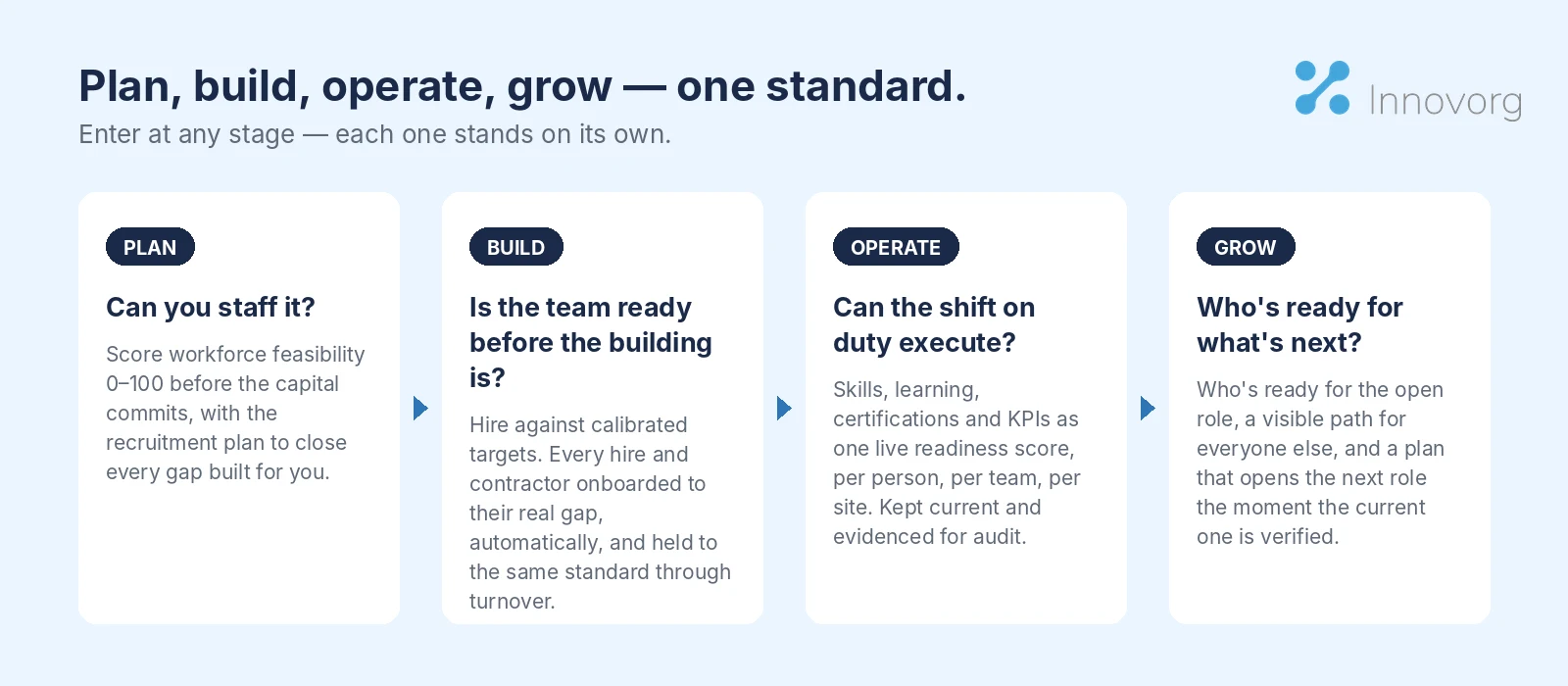
- Plan: Can you staff it? Score workforce feasibility 0–100 before the capital commits, with the recruitment plan to close every gap built for you.
- Build: Is the team ready before the building is? Hire against calibrated targets. Every hire and contractor is onboarded to their real gap, automatically, and held to the same standard through turnover.
- Operate: Can the shift on duty execute? Skills, learning, certifications and KPIs as one live readiness score, per person, per team, per site, kept current by the platform and evidenced for audit.
- Grow: Who's ready for what's next? Who's ready for the open role, a visible path for everyone else, and a plan that opens the next role the moment the current one is verified.
Most operators come to it at Build, when a go-live date makes the question urgent, or at Operate, when turnover or an audit exposes it. The standard is the same either way.
Readiness is an operations metric
Workforce readiness is usually filed under HR or L&D. We think it belongs with operations, on the same dashboard as power, permits and equipment lead times.
Foresight made the case at infra/STRUCTURE with hard numbers. Nine out of ten data center projects are delivered late. One month of delay on a 60 MW project erodes about $14.2M in value. And their research with Oxford found that the root causes are mostly internal: optimistic planning, fragmented accountability, poor sequencing and weak real-time visibility. Their answer is "the other iron triangle" of people, process and systems.
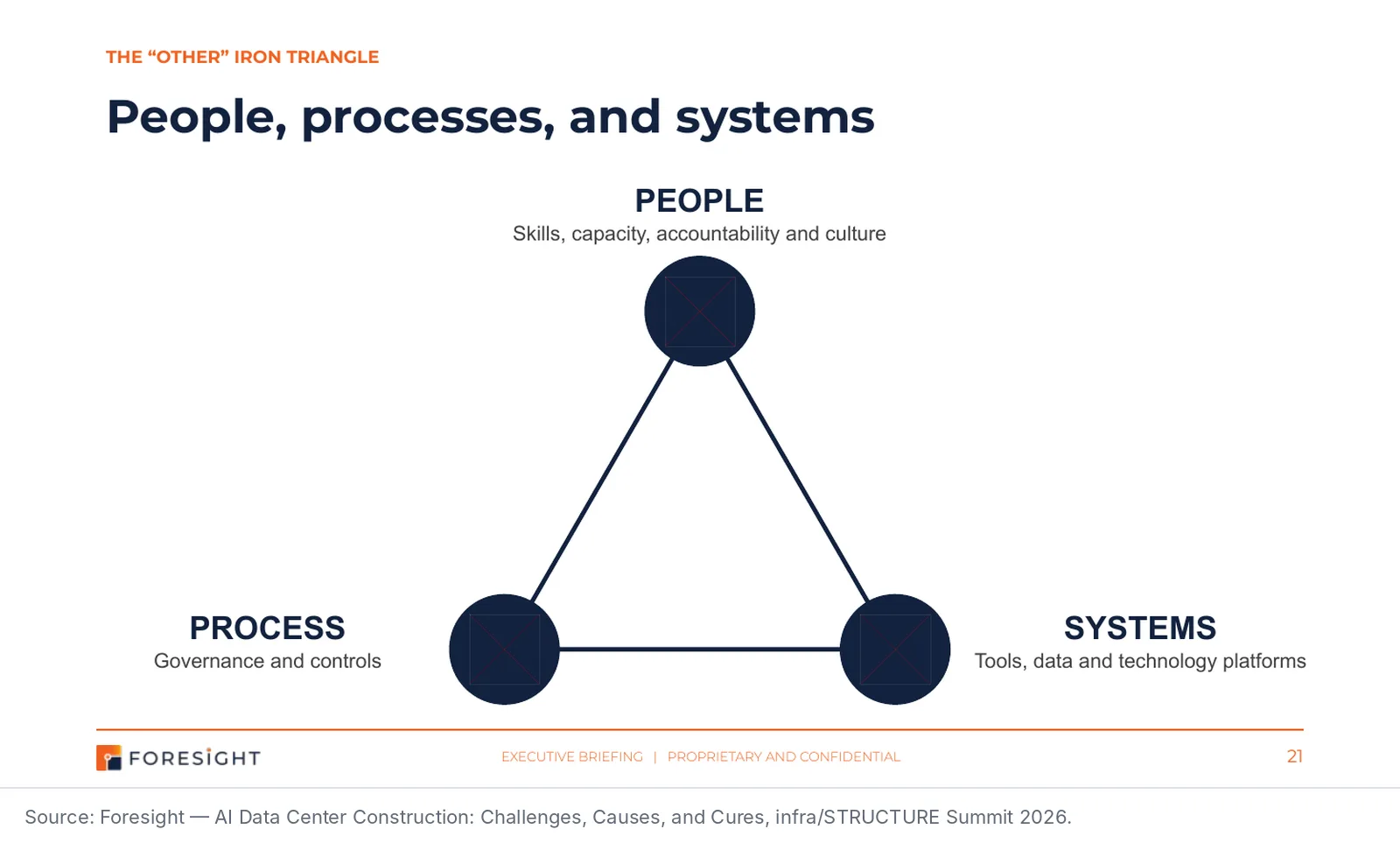
Of those three legs, people is the one with the least instrumentation. Most operators can report PUE to two decimal places. Very few can report, with the same rigour, whether the team commissioning next quarter's hall is ready to do it.
That is the gap a readiness standard closes. When readiness is measured, it can be owned. When it is owned by the operations leader, it gets treated like any other delivery risk: tracked, escalated and fixed before it shows up as a missed date.
The same standard, applied to AI agents
Jabez Tan of Structure Research closed his Day 1 keynote with a slide that will shape operations teams for the next decade. AI is moving from reactive (you ask, it answers) to agentic (you assign, it works) to proactive (it notices, then acts).
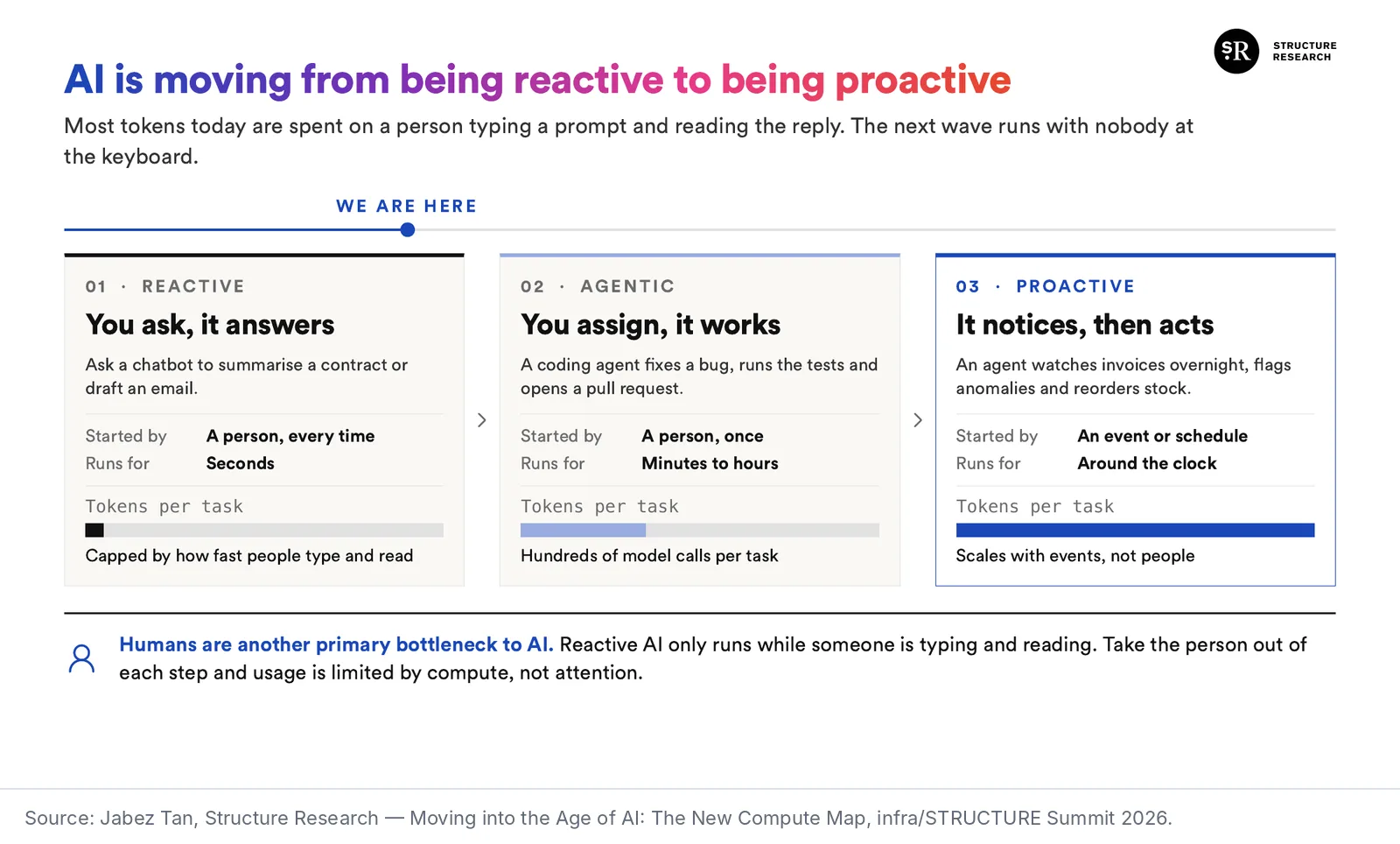
This is already reaching the operations floor. Vendors at the summit showed AI agents handling first-line alarm triage and suggesting root causes across hundreds of facilities.
Which raises a question few people are asking yet. If an agent is doing triage at 3 a.m., who decided it was ready for that work? Against what standard?
We believe the answer should be the same standard you use for the people beside it. Define the role. Define the work. Measure against it with evidence. Keep an accountable person on the decisions that matter. The operating model of the next few years will be people and agents together, and the decision about what is human and what is agent should be made with the same rigour for both.
A five-question self-check for this week
You do not need a platform to start. Take one site and answer these honestly.
- For your most critical role at that site, is there a written role profile listing the skills and proficiency levels the current equipment requires?
- When the hardware last changed, did that profile change? If you moved to higher density or liquid cooling, who updated it, and when?
- For tonight's shift, can you name who is ready to handle your three most likely incidents without calling someone at home?
- Where does your readiness evidence come from? Course completions and self-assessments only, or demonstrated competency, manager validation, current certifications and KPIs?
- Who owns the answer? If readiness slipped at that site, whose dashboard would show it first?
If any of these took more than a minute, or the answer was "it depends who you ask", that is your starting point.
Capacity is contracted. Capability is the constraint. Workforce readiness, run like infrastructure.
---
Ready to see it on your workforce? A working session on your roles and where the gaps are, not a slide deck. Book a demo →